Enhance learning with storytelling in the classroom! Discover how this teaching strategy boosts student engagement, improves comprehension, and creativity.
Learn practical tips to make lessons memorable and interactive. Perfect for educators aiming to create an inspiring and effective learning environment through the power of stories.
Storytelling in the Classroom as a Teaching Strategy
Education is not limited to gaining knowledge from books alone. Simply coming to school, studying a few lessons, and going home does not lead to true learning or completeness of knowledge. Real education is a holistic process that helps develop a learner’s intellectual ability, moral values, critical thinking, imagination, and communication skills. For this to happen, a friendly and supportive relationship between students and teachers is essential.
In this context, storytelling works as a powerful and unique teaching strategy. Stories touch the human mind and heart because they carry emotions, experiences, and reflections of real life. Through storytelling in the classroom, teachers can make lessons more lively, engaging, and memorable. It helps students understand concepts more deeply and, at the same time, builds a strong emotional connection between teachers and students, creating a meaningful learning environment.
“Stories are a great way to connect with people. They can be a source of inspiration and learning.” — Sudha Murty
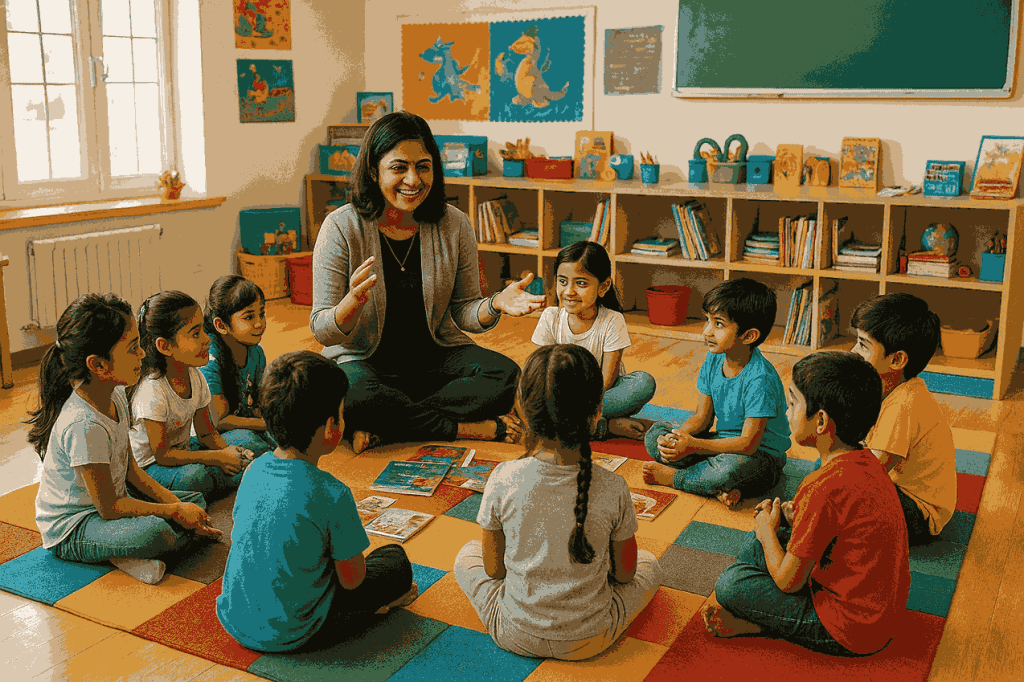
What Types of Storytelling are There?
Storytelling is not merely about telling stories for entertainment. It is a deliberate and thoughtful teaching strategy used in the learning process, where teachers present academic content in the form of well-structured stories to make it deeply understandable and meaningful. Through stories, students can easily grasp information, concepts, and values, and later apply them in practical and skill-based contexts. For example, when events of India’s freedom struggle are taught as stories in history classes, students not only understand historical facts better but also develop a sense of patriotism and emotional connection with the subject.
Methods of Storytelling in the Classroom
Teachers can use various storytelling techniques in the classroom to enhance learning:
- Oral storytelling: The teacher narrates stories using voice modulation, expressions, and gestures to bring the lesson to life.
- Use of pictures or flashcards: Visual aids along with stories help students understand concepts clearly and maintain interest.
- Puppet or doll shows: Especially effective for younger learners, puppet storytelling makes learning fun and engaging.
- Role play or dramatization: Students act out characters from the story, which builds confidence, creativity, and teamwork.
- Digital storytelling: Using videos, animations, PowerPoint presentations, or audio stories is a modern and effective way to teach in today’s classrooms.
The importance of Storytelling in the Classroom
Importance of Storytelling in the Classroom
- Increases students’ attention: Stories are naturally engaging. When teachers present lessons through stories, students listen with interest and remain focused on learning.
- Makes learning enjoyable: Instead of rote memorization, learning through stories feels fun and meaningful. This makes the learning process stress-free and more spontaneous.
- Improves memory and understanding: Stories include characters, events, and dialogues, which are easier for students to remember. As a result, learning becomes deeper and long-lasting.
- Teaches moral values: Through stories, teachers can effectively convey values such as honesty, empathy, kindness, courage, and responsibility.
- Enhances language and communication skills: Listening to stories helps students build vocabulary, improve pronunciation and sentence structure, and learn to express their thoughts clearly.
- Develops imagination and creativity: Stories stimulate children’s imagination. They connect with characters and situations, think creatively, and learn to form new ideas.
Overall, storytelling transforms the classroom into an engaging space where learning becomes meaningful, enjoyable, and holistic.
How to Use Storytelling in Your Classroom
The Role of the Teacher in Storytelling
In storytelling, the teacher’s role is extremely important. A teacher is not just a storyteller, but a motivator and guide. To make a story lively and effective, the teacher must use appropriate word choice, body language, facial expressions, and voice modulation. These elements help bring the story to life and keep students emotionally engaged.
At the end of the story, the teacher should always lead a short discussion, focusing on questions such as:
- What is the main message of the story?
- Which values does the story teach?
- How can these ideas be applied in real life?
This reflection helps students connect the story with learning outcomes.
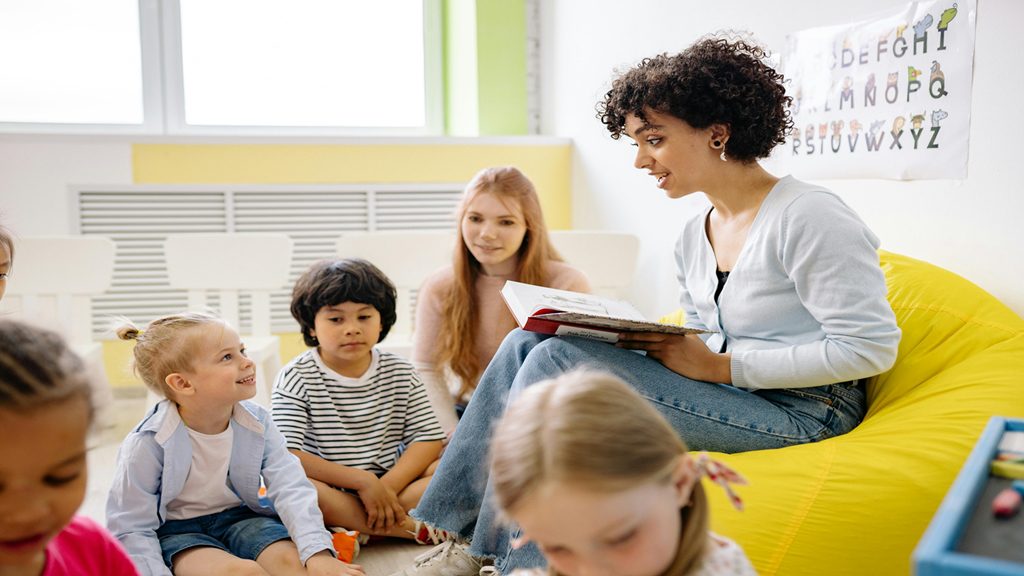
The Role of the Students
In storytelling-based classes, students are active participants, not passive listeners. They listen carefully, ask questions, share opinions, and sometimes create their own stories. This process helps improve their confidence, critical thinking, creativity, and communication skills
Guidelines for Selecting Stories
- The story should be suitable for the students’ age and level of understanding.
- It should carry a clear educational or moral message.
- The language must be simple, clear, and engaging.
- The story should relate to the students’ culture and environment.
- The length should not be too long, so attention is maintained.
- The story should align with the subject content, including elements such as plot, characters, setting, conflict, and resolution, connected meaningfully to the lesson.
Advantages and Challenges of Storytelling
Advantages:
- Learning becomes easy and enjoyable
- Interest in the subject increases
- Memory, imagination, and creativity improve
- Teamwork and communication skills develop
Challenges:
- Limited classroom time
- Engaging all students in large classes can be difficult
- Without proper training, the quality of storytelling may decrease
Storytelling as a Teaching Method
Storytelling is a classroom game-changer, far beyond bedtime tales:
- Engagement: A captivating story draws in students, making lessons memorable by stimulating multiple areas of the brain.
- Cognitive Boost: Stories fuel imagination, helping students grasp complex ideas and link concepts.
- Cultural Insight: Through stories, students explore diverse cultures and perspectives, broadening their worldview.
- Soft Skills: Storytelling enhances communication and presentation skills, boosting confidence and self-expression.
Storytelling is an effective teaching method that helps students learn and understand information and lessons through stories.
However, with regular practice, proper preparation, and careful story selection, these challenges can be easily overcome. Storytelling is not just a form of entertainment; it is a powerful teaching strategy that brings learning to life. Through storytelling in the classroom, students do not only learn academic content, but also develop real-life values, empathy, and critical thinking skills. Stories expand their imagination and turn learning into an enjoyable experience.
Therefore, if every teacher includes storytelling as part of their daily lesson planning, education will become more meaningful, humane, and creative.
Read More:
- Knowledge on First Aid in School and Common Health Problems
- Children With Special Educational Needs
- Annual Academic Calendar of WBBSE Class 5-10: Working Plan
Download Some: Story For Your Student
FAQ on Storytelling in the Classroom
What are the objectives of storytelling in the classroom?
The objectives of storytelling in the classroom are as follows: to increase students’ interest, improve listening skills and comprehension, enhance language skills, develop moral and social values, encourage creativity and imagination, build self-confidence, and make the learning process enjoyable.
How to use storytelling in the classroom?
To use storytelling effectively in the classroom, teachers should select stories that are closely related to the lesson content. While telling the story, they should use facial expressions and gestures to make it engaging. Teachers should also encourage student participation, ask questions, and use the story to make the lesson enjoyable, meaningful, and interactive.
How to teach storytelling in the classroom?
To teach storytelling in the classroom, teachers should explain the elements of a story, such as characters, setting, and plot. Students should be given opportunities to create and tell their own stories. Using pictures, gestures, and role play makes stories lively and helps students learn with interest and enjoyment.
How to use digital storytelling in the classroom?
For digital storytelling, teachers can use videos, images, audio, and presentations. Students can create and share their own stories using technology. This approach enhances their creativity, technological skills, and communication abilities, making lessons more engaging and effective.
How do you measure learning outcomes from storytelling lessons
Learning outcomes from storytelling lessons can be measured using multiple tools. Teachers can assess students through story retelling, question–answer sessions, class discussions, role play, creative writing or drawing, and reflective activities. Quizzes, rubrics, classroom observation, and feedback help evaluate students’ comprehension, language development, creativity, participation, and value-based learning effectively.